
Zimbabwe's property market has a fraud problem. The Zimbabwe Republic Police recorded property fraud cases valued at over US$15 million in 2024 — and that's only what was reported. The actual figure is certainly higher. If you're buying, renting, or investing in Zimbabwe property, understanding how these scams work isn't optional. It's the price of entry.
The scale of the problem
The Estate Agents Council of Zimbabwe (EACZ) reported a significant rise in complaints against unregistered agents, fake developers, and incomplete projects in 2024, particularly in Harare, Ruwa, and Chitungwiza. The combination of a USD-denominated market and desperate buyers creates fertile conditions for fraud.
Diaspora buyers account for an estimated 40% of fraud reports — targeted via Facebook groups and WhatsApp, they wire money before seeing properties or verifying ownership. The distance between buyer and property, combined with urgency tactics and the emotional appeal of investing in home, makes diaspora Zimbabweans especially vulnerable.
The ripple effects extend beyond the direct victims. Well-informed buyers discount asking prices significantly due to fraud concerns, suggesting that fear of fraud is itself distorting market dynamics and suppressing legitimate transactions.
The 6 most common scams
Knowing what these schemes look like — in detail — is your first line of defence. Most scams share the same structural features: urgency, below-market pricing, resistance to verification, and pressure to bypass formal channels.
1. Fake listings
Properties listed at well below market value to attract rushed buyers. The listing shows real photos — often scraped from legitimate listings elsewhere on the internet — but the "seller" has no connection to the property whatsoever. Watch for these signs: the price is 30–50% below comparable properties in the same area; the seller is unavailable or evasive about physical viewings; there's pressure to pay a deposit immediately to "secure" the property before other interested buyers take it.
2. Impersonation
A fraudster claims to be the property owner — or their authorised representative — and shows you a forged title deed. They may arrange a viewing using a co-conspirator who plays the role of the owner convincingly. Signs: the name on the title deed differs from the person you're dealing with; the seller can't produce utility bills or council rates statements in their name; they push to close quickly without introducing you to a registered conveyancer.
3. Double sales
The same property is sold to multiple buyers simultaneously. Each buyer receives what appears to be the original title deed, and the fraudster disappears with several deposits. Signs: the seller is resistant to registering the title transfer promptly through the Deeds Registry; the deal seems unusually fast and informal; you're told a "quick transfer" is available outside normal channels.
4. Developer fraud and unbuilt stands
A developer sells stands or units in a project that either doesn't exist, will never be completed, or is being sold without the relevant subdivision approvals from council. Particularly common in the Chitungwiza and Ruwa development corridors, where rapid growth creates opportunities for bad actors. Signs: no approved subdivision layout can be produced; the developer can't show council approval documents; the project is perpetually "coming soon" with no visible ground activity.
5. Fake powers of attorney
A fraudster uses a forged or obtained-under-duress Power of Attorney to sell a property on behalf of the legitimate owner — who may be elderly, deceased, cognitively impaired, or living abroad. Signs: the POA is recent and specifically authorises a property sale; the actual property owner is unavailable for direct contact; the title deed shows a much older purchase date under a different owner's name.
6. Advance fee fraud
"Pay a legal fee / registration fee / stamp duty upfront, then receive your title deed." Once the payment is made — often in cash, through mobile money, or via informal transfer — the fraudster disappears. Signs include any request for upfront fees through informal channels; an agent who can't produce formal written documentation; and any instruction to pay fees in cash rather than through a conveyancer's trust account.
The verification checklist
Before paying any money — for a deposit, a holding fee, or anything else — work through this checklist. Every step is available to any buyer, and none of them are optional.
- Verify the title deed at the Deeds Registry (Harare or Bulawayo) — any member of the public can request a search
- Confirm the seller appears in the Deeds Registry as the current registered owner
- Check the agent's EACZ registration number at eac.co.zw — registered agents are bound by professional standards
- Verify the developer's standing with the relevant developer's council
- Never pay a deposit without a formal sale agreement drafted by a registered conveyancer
- For diaspora buyers: engage a Zimbabwe-based lawyer or trusted family member to physically verify the property and confirm it exists as described
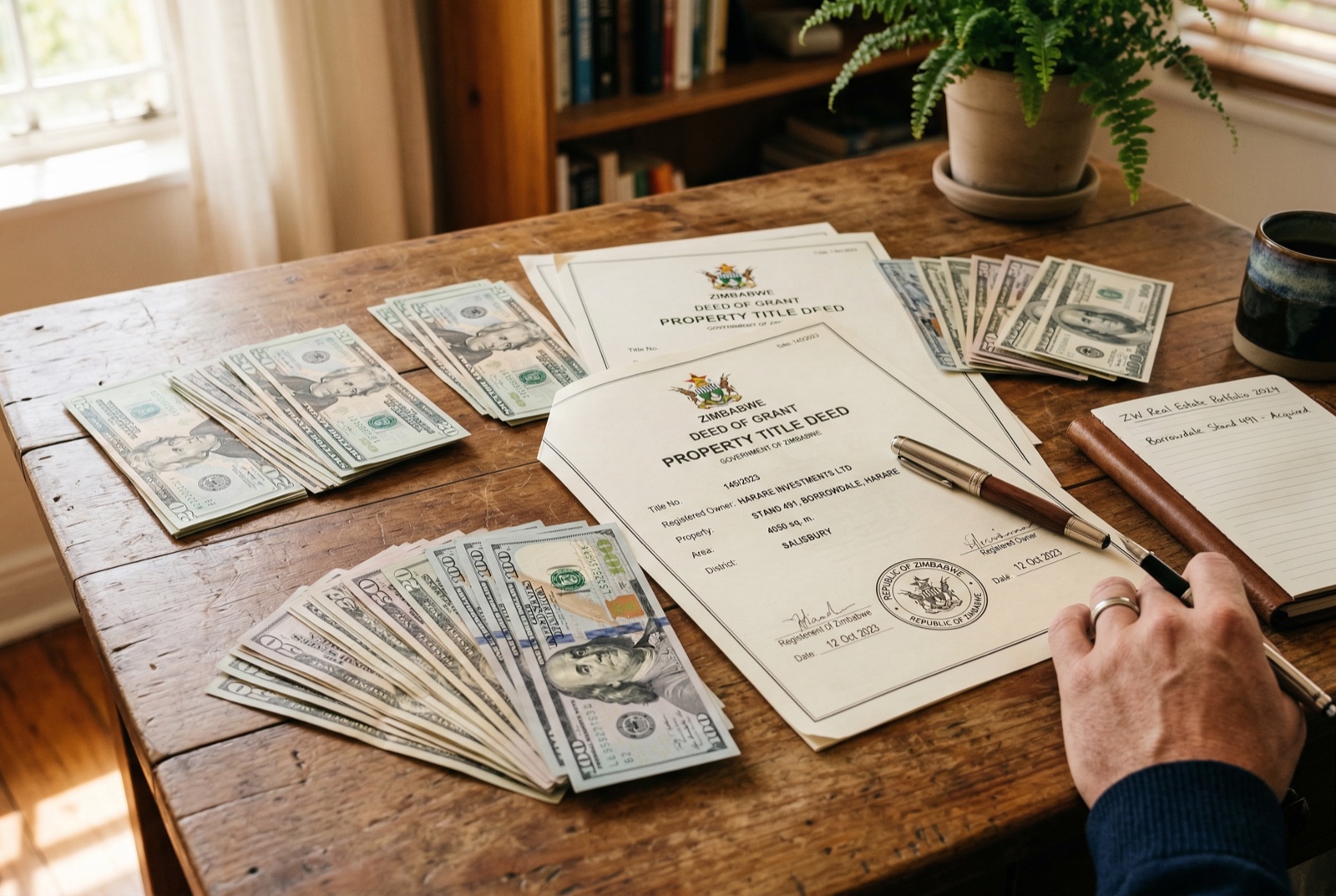
All property deposits should be paid through a registered estate agent's trust account — never cash to an individual.
Protecting diaspora buyers specifically
Diaspora Zimbabweans are the most consistently targeted group in Zimbabwe property fraud. The reasons are structural: they can't inspect properties in person; they rely on digital communications that are easy to fake; they may feel a false sense of trust with sellers who claim a shared background; and fraudsters know that diaspora buyers have access to foreign currency in amounts that make the effort worthwhile.
The combination of urgency (the opportunity is going fast), distance (they can't inspect in person), and manufactured trust (the seller may claim a family connection or shared community background) makes for highly effective fraud. Three non-negotiable rules for diaspora buyers:
- Never wire money without a title deed check by a Zimbabwe-based lawyer. This is the single most important step. A conveyancer's search fee is trivial relative to the amounts at stake.
- Never buy property you haven't verified through live video walkthrough with an independent, trusted person physically present on the ground — not a contact introduced by the seller.
- Use only registered estate agents with verifiable EACZ numbers. Registered agents maintain trust accounts and carry professional liability. Unregistered agents have no accountability mechanisms.
What to do if you've been scammed
If you believe you've been a victim of property fraud, act immediately and document everything. Time matters both for potential prosecution and for any civil recovery action.
Report to the Zimbabwe Republic Police Fraud Unit. Bring all documentation: WhatsApp messages, email threads, transfer receipts, the fraudster's contact details, copies of any documents they provided. Even if recovery seems unlikely, reporting builds the evidentiary record that leads to prosecutions.
Contact the Estate Agents Council of Zimbabwe if the fraud involved someone claiming to be a registered agent. The EACZ has investigative and disciplinary powers.
Consult a lawyer about civil recovery. If the fraudster can be identified and has attachable assets, civil action may be possible. Recovery is difficult and not guaranteed, but it has succeeded in documented cases. The sooner you engage a lawyer, the better your options.
The best outcome, of course, is to never need this section. The verification steps above, consistently applied, eliminate the vast majority of fraud risk. They add time to a transaction — but that time is worth it.