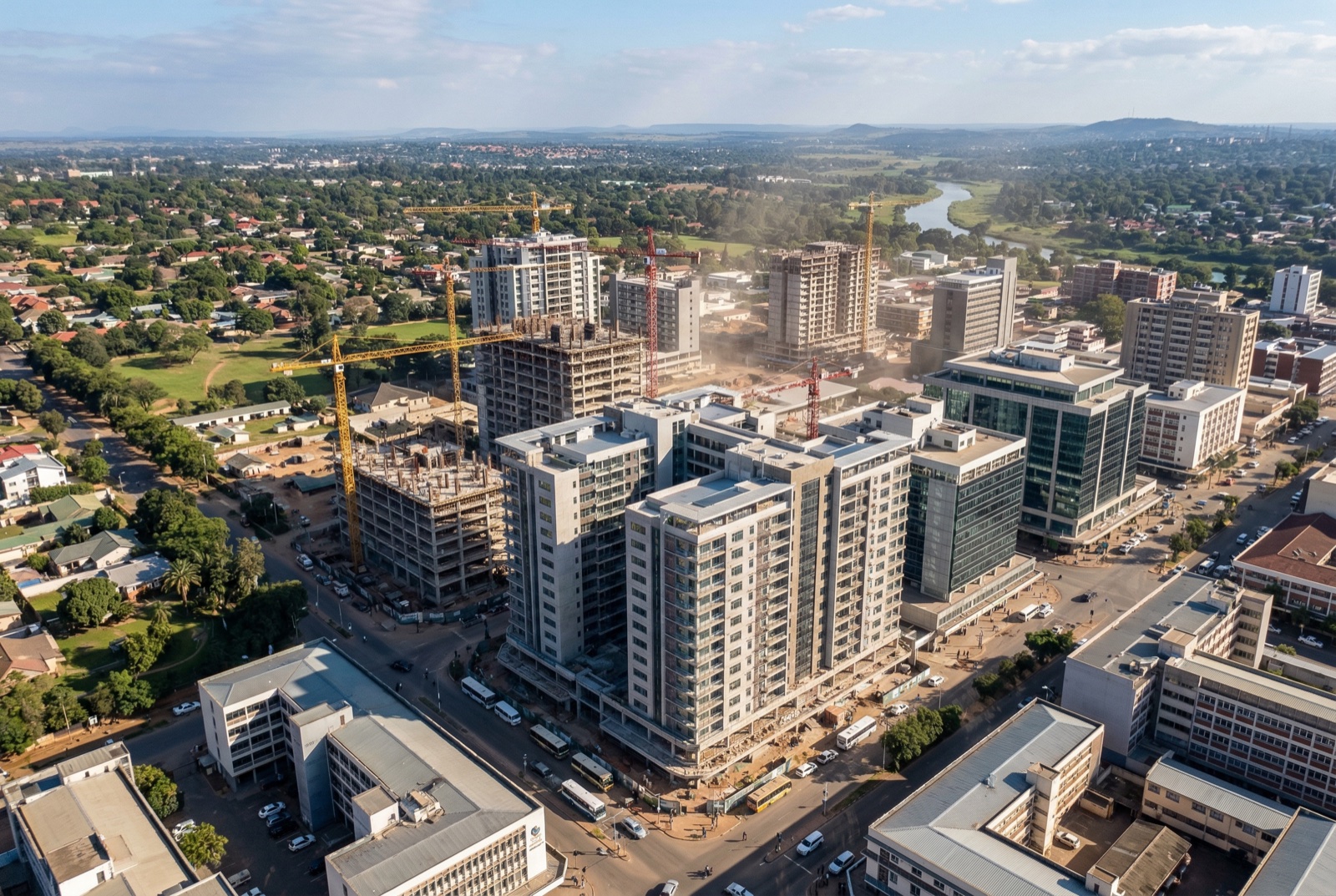
Zimbabwe's capital recorded a dramatic 36.8% increase in property prices through 2024, according to data compiled from Zimbabwe's leading property portals — making it one of the strongest performing real estate markets on the continent.
The headline figure surprised even seasoned local observers. While Harare has long attracted interest from the diaspora and a small but active domestic investor class, a near-40% single-year movement demands scrutiny. Is this a structural shift in how Zimbabwe's urban property market is priced? A currency distortion masquerading as real growth? Or a genuine demand story with legs?
The answer, as with most things in Zimbabwean property, is more complicated than the headline.
What the Numbers Show
The 36.8% figure represents an average across all residential property types — detached houses, townhouses, and flats — tracked through listings data on Property.co.zw and other major portals. It is not a uniform number: the composition of that average matters considerably for buyers and investors trying to make sense of specific segments.
New construction now accounts for 43% of available properties on the market, a significant jump from previous years. Developer activity has been concentrated in the northern and eastern corridors — areas such as Borrowdale Brook, Tynwald, and the expanding periphery of Mt Hampden — where land access is easier and title deeds are more reliably processed than in older infill suburbs.
Within established suburbs, the picture divides sharply by price bracket. The luxury tier — Borrowdale, Mount Pleasant, Highlands, and Chisipite — is showing 8–12% USD appreciation year-on-year. These suburbs had already seen significant capital appreciation in the 2020–2022 recovery period, so the slower growth reflects a higher base rather than cooling demand. Mid-range suburbs, by contrast, are seeing the larger percentage gains as capital chases relatively affordable entry points into the Harare property ladder.
In areas like Budiriro, Kuwadzana extension, and the newer sections of Ruwa, the percentage movements are dramatic — but the absolute dollar values remain modest enough that USD-earning diaspora buyers can accumulate deposits without the multi-year horizon required for premium suburbs.
The ZiG Factor
No analysis of Zimbabwe's 2024 property market can ignore the currency context. Zimbabwe introduced its new currency, the Zimbabwe Gold (ZiG), on April 8, 2024, at a rate of 13.56 ZiG per US dollar. The new currency was backed, according to the Reserve Bank of Zimbabwe, by gold and foreign currency reserves — and was intended to provide monetary stability after years of ZWL collapse.
The stability did not hold. By September 27, 2024, the Reserve Bank devalued the ZiG by 42.55% in a single adjustment, resetting the official rate to 26.36 ZiG per USD. Unofficial parallel market rates were reported at even more elevated levels in the weeks that followed, suggesting that ZiG had effectively repeated the trajectory of its predecessors.
"When local currency depreciates rapidly, bricks and mortar become an obvious hedge — a pattern Zimbabwean buyers know well."
For property, the ZiG factor operates on two levels. High-value transactions in Zimbabwe are overwhelmingly USD-denominated. A house listed at $220,000 in Borrowdale is priced in US dollars; the ZiG rate does not directly change that number. In this sense, the ZiG's collapse does not cause the USD price of Harare property to rise.
But currency weakness does matter for ZiG-earning buyers trying to accumulate the capital for a USD deposit. If your salary is paid in ZiG and the ZiG loses 42% of its USD value overnight, the deposit you were saving toward is suddenly 42% further away. This dynamic concentrates demand among people who already hold USD — diaspora remittances, foreign-denominated salaries, or legacy savings — and shuts out a wider local buyer base, compressing the market into a smaller pool of better-capitalised participants.
Diaspora Demand
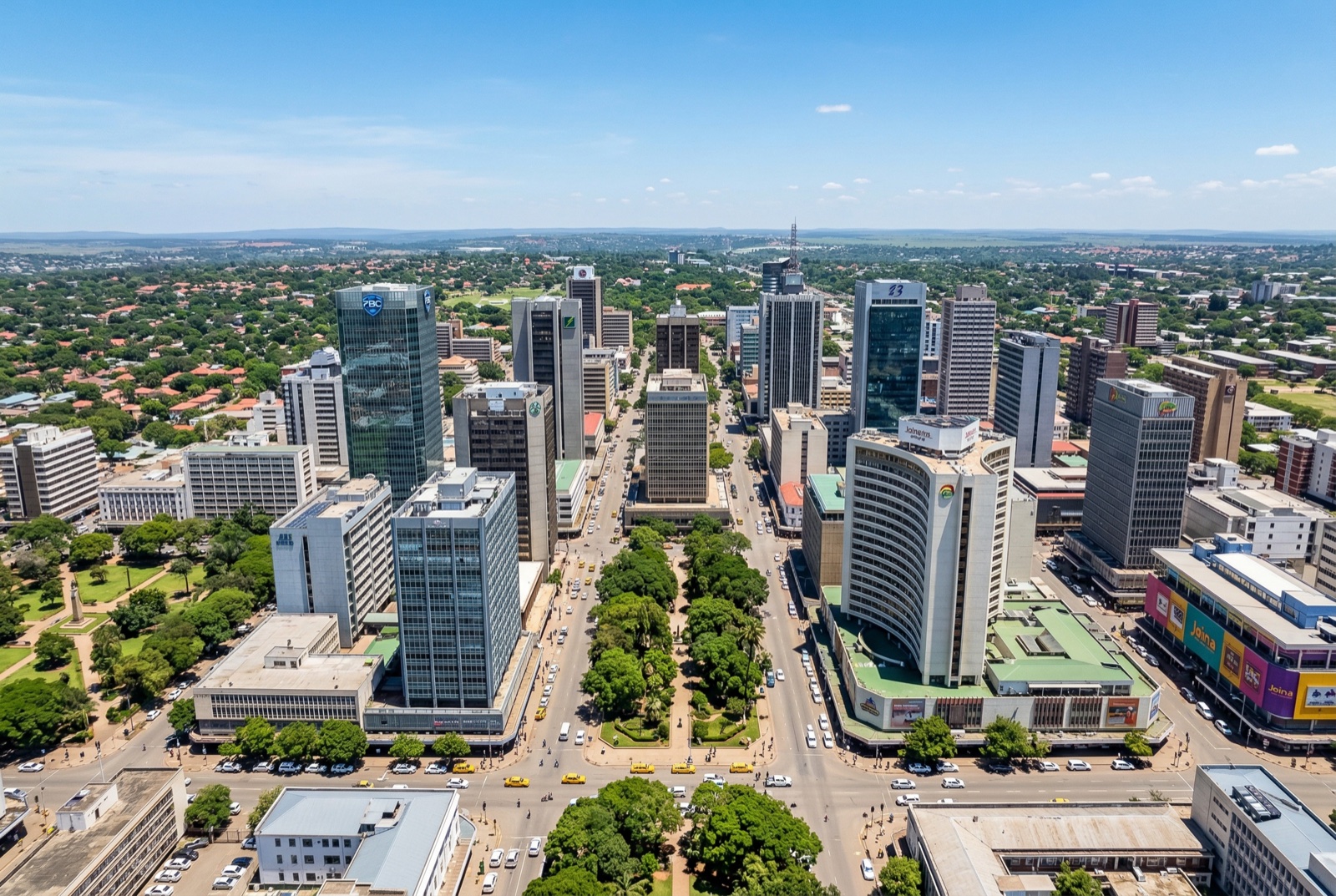
The most structurally important driver of the 2024 Harare market is one that does not appear in any domestic economic data: the diaspora. According to Property.co.zw figures, 43% of all property inquiries in 2024 originated from diaspora Zimbabweans — buyers based in the United Kingdom, South Africa, Australia, Canada, and the United States.
This is not a new trend, but it has intensified. Three dynamics explain the concentration. First, Zimbabwe's consistent USD anchoring for high-value property makes the market legible and plannable for international buyers in a way that many other African markets are not. A buyer in South Africa knows that the price they see today will not be quoted in a different denomination six months from now. Second, the maturation of USD-denominated mortgage-alternative structures — staged payment plans, developer installments, and building loan arrangements — has lowered the cash barrier somewhat for diaspora buyers who cannot easily move a lump sum cross-border. Third, emotional and generational pull: Zimbabwe's large professional diaspora population includes many people in their 40s and 50s who are actively planning return or retirement, and who see property acquisition as part of that planning.
Diaspora demand is heavily concentrated in the northern suburbs — Borrowdale, Borrowdale Brook, Pomona, and the new estates in the Mazowe Road corridor — which aligns with the 8–12% USD appreciation seen in those areas. The sustained flow of diaspora capital into the northern corridor adds a price floor that domestic-only demand could not sustain alone at these valuations.
Is It Sustainable?
The durability of the current pricing level depends on which of the driving forces you weight most heavily.
Arguments for durability are meaningful. Supply in the premium northern suburbs is structurally constrained: stand sizes are large, zoning is restrictive, and the premium attached to proximity to quality schools, shopping, and road infrastructure is not easily replicated by new development on the urban fringe. The government's stated commitment to maintaining USD usability until at least 2030 provides a planning horizon that encourages longer-term investment decisions. And the diaspora pipeline is structural rather than cyclical — it is not going to disappear because of a quarter of weak global economic data.
The risk factors, however, are real. The most significant is the affordability ceiling. At a 2024 average of approximately $235,000 across the residential market, Harare property is priced beyond the reach of the vast majority of local buyers. Zimbabwe has no functioning mortgage market: bank lending rates of 20–25% make financed purchase economically irrational for almost any residential use case. The market is, in practical terms, entirely cash. When the buyer universe is limited to cash purchasers, you are always one diaspora sentiment shift away from a liquidity event.
The 43% new construction share also introduces a supply variable. If developers continue building at current rates and diaspora demand softens — whether due to global recession, South African rand weakness reducing remittance capacity, or UK policy changes affecting the Zimbabwean community there — the market could face a temporary oversupply relative to the active buyer pool. Prices are unlikely to collapse in USD terms given the structural undersupply of quality housing relative to aspirational demand, but the pace of appreciation is unlikely to be repeated in 2025.
What This Means for Buyers, Sellers, and Investors
For buyers, the current environment demands more rigour in due diligence than a less heated market would require. Entry costs are higher in absolute terms than at any point in the last decade, which means the financial consequences of a fraudulent title or a disputed boundary are proportionally more severe. Engage a registered conveyancer. Verify title at the Deeds Office. Scrutinise developer credentials before making staged payments on off-plan purchases. Realistic price comparables should be pulled from actual sales records, not asking prices on portal listings.
For sellers, the 2024 data represents a favorable pricing environment, but the market continues to reward properties that are realistically priced over those that attempt to extract a premium beyond demonstrated comparables. Overpricing in a thin, cash-only market creates prolonged time-on-market and eventual capitulation — which typically lands below where realistic initial pricing would have started.
For investors, the yield picture in premium suburbs remains compelling relative to comparable-quality residential assets in most peer markets. Rental yields of 6–8% USD in areas like Borrowdale and Mt Pleasant are achievable for well-presented properties managed by professional agents, against a backdrop of limited quality rental stock relative to the number of companies and organisations requiring executive accommodation in Harare. The combination of capital appreciation potential and meaningful USD yield is rare in the current global environment, and it is the most credible long-term argument for holding Harare property through currency uncertainty and periodic market softness.