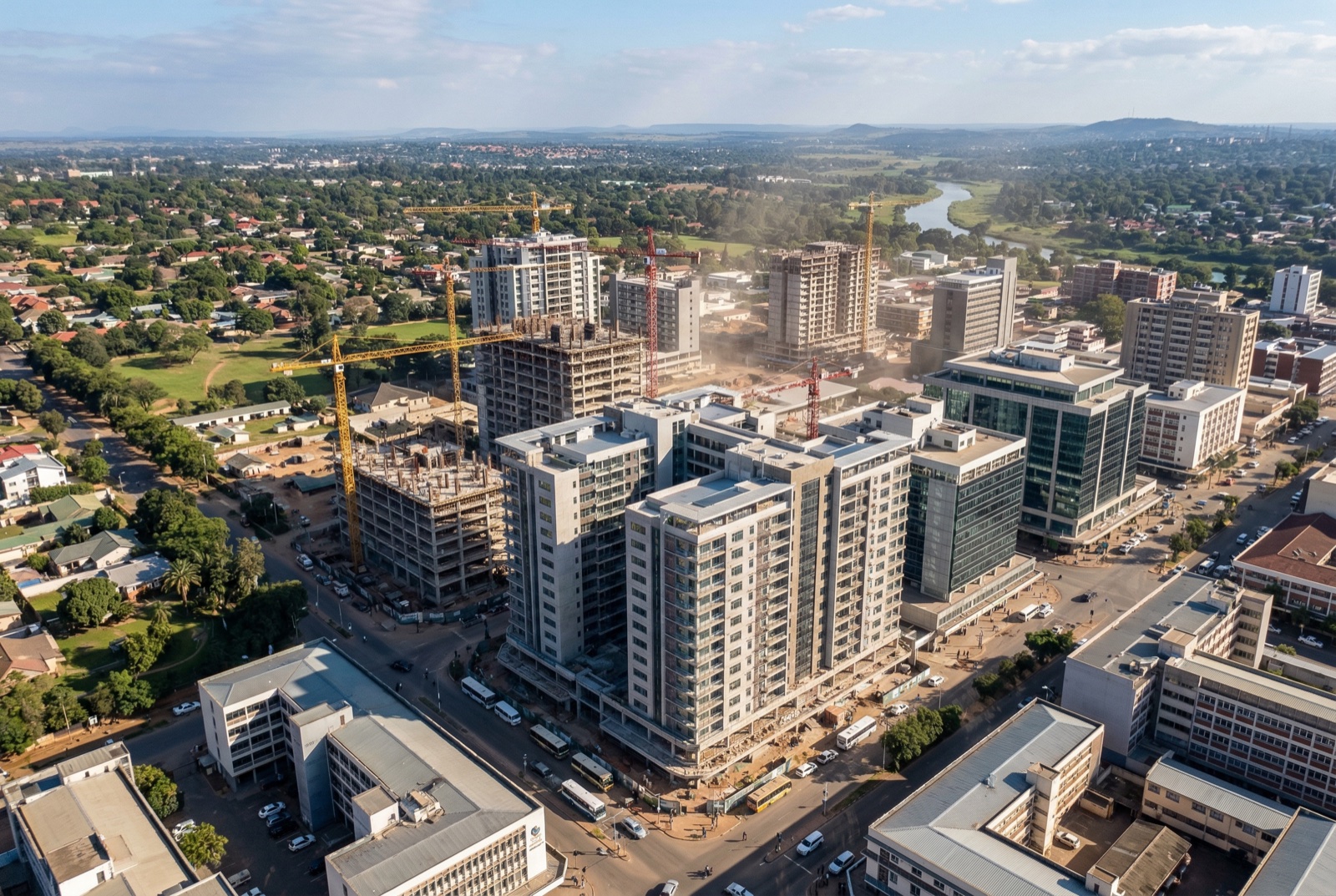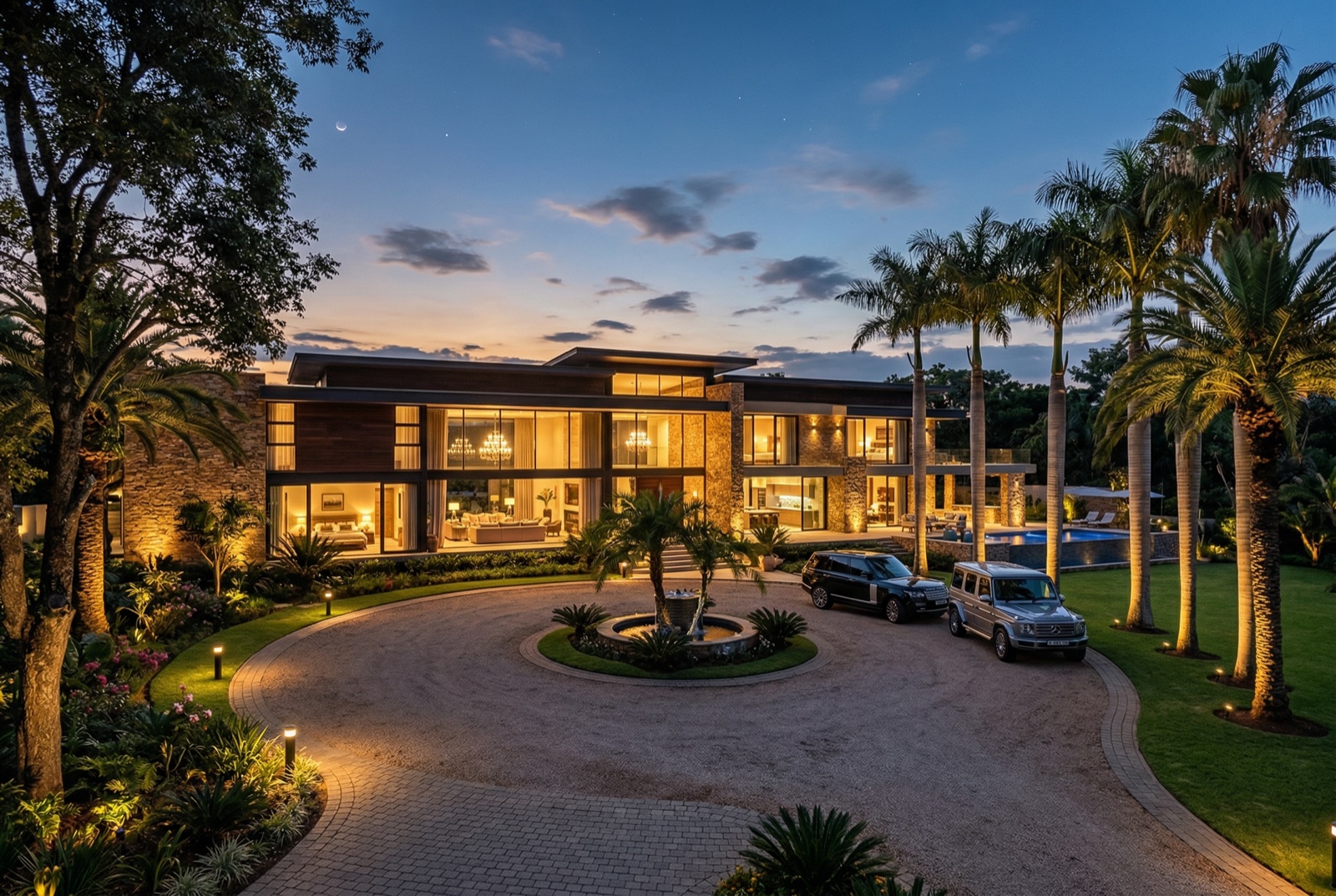
Zimbabwe's property market runs on US dollars, and for investors willing to weather currency risk and management complexity, it runs at yields that would be unrecognizable in London or New York. We've compiled suburb-by-suburb data on what rental properties are actually returning in USD terms in 2023.
Ask a property investor in the UK what a good residential yield looks like and they'll quote you somewhere between 4% and 6% gross — and consider themselves fortunate to be above 5%. In the US, 5–8% is the benchmark across most urban markets. In Harare, a well-chosen property in the right suburb can generate gross yields of 8–12% in US dollar terms, with even conservative mid-range properties sitting in the 7–9% range.
Those numbers are real. They are also not the whole story. Zimbabwe's rental market comes with a set of structural peculiarities — currency dynamics, tenant profile concentration, vacancy risk, tax exposure, and management complexity — that don't show up in the gross yield figure. The purpose of this analysis is to walk through the actual arithmetic, suburb by suburb, so that buyers can make decisions based on complete information rather than headline numbers.
Why Zimbabwean Yields Look Attractive
The yield advantage is structural, not accidental. Three factors combine to produce it. First, property prices in Zimbabwe remain substantially below the levels one would expect relative to rents if capital markets functioned normally. The collapse of the formal mortgage market — banks quote residential lending rates of 20–25% per annum, making financed purchase economically irrational — means that property must price to attract cash buyers, who demand a higher yield premium than leveraged buyers in functioning mortgage markets. There is no bid from first-time buyers stretching with a 95% loan-to-value mortgage; every buyer is writing a check.
Second, the tenant pool for quality properties is anchored by a high-paying, hard-currency segment that has no equivalent in most markets: NGO and embassy staff. Harare hosts significant UN agency presences, bilateral embassies, international development organizations, and the regional headquarters of several multinational companies. These organizations pay USD rents on behalf of their staff, often at rates that would be considered premium in a more liquid market. The rents are real, they clear on time, and they are not subject to ZWL depreciation in any meaningful way.
Third, Zimbabwean landlords have historically had relatively low competition from institutional rental housing stock. Purpose-built rental apartment buildings are rare; most rental supply comes from individual landlords renting private homes. The structural shortage of quality, well-managed rental property relative to demand from the professional expatriate and local upper-middle class sustains above-average yields.
Suburb-by-Suburb Yield Breakdown
Yields vary significantly by location, property type, and tenant profile. The figures below reflect 2023 market data compiled from active listings on Zimbabwe's major property portals, cross-referenced with reported transaction prices and asking rents. Gross yields are calculated as annualized monthly rent divided by purchase price.
Borrowdale
Borrowdale is Harare's premier residential suburb — large stands, mature tree-lined streets, proximity to the Borrowdale shopping corridor, and a concentration of diplomats, senior NGO staff, and company executives. A four-bedroom house in good condition commands $2,500–$5,000 per month in rent. Purchase prices for equivalent properties run $350,000–$800,000. The math produces a gross yield range of approximately 7–9%, with the upper end attainable in properties that are well-presented, professionally managed, and positioned to attract institutional tenants on multi-year lease agreements.
Avondale
Avondale sits in the inner northern belt — established, walkable, and well-connected to both the CBD and the northern suburbs. It attracts a mix of local professionals, lower-tier NGO staff, and small business owners who prefer proximity to amenities over the space of outer suburbs. A three-bedroom house in Avondale rents for $800–$1,500 per month; purchase prices range $120,000–$250,000. Gross yields come in at 7–8% — similar to Borrowdale, but with a more diverse tenant pool and a lower absolute entry cost. For investors with sub-$200,000 capital, Avondale offers the best balance of yield, tenant quality, and market liquidity.
Kuwadzana and Budiriro
These higher-density western suburbs represent the accessible end of the Harare investment market. Properties here are smaller, prices are lower, and the tenant base shifts toward middle-income local families rather than the expatriate and professional class. Monthly rents run $300–$600 for a typical residential property; purchase prices in the $45,000–$90,000 range. Gross yields of 8–10% are achievable, and some properties push beyond 10% when bought at the right price. The trade-offs are real: vacancy risk is higher, rent collection in USD is less consistent (some tenants pay partially in ZiG/ZWL), and maintenance demands relative to property value are higher. These are higher-yield, higher-work investments.
Apartments — Newlands and Belgravia
Harare's apartment stock is limited but offers a distinct investment proposition. Well-located one- and two-bedroom apartments in Newlands and Belgravia attract young professionals, junior embassy staff, and people seeking low-maintenance urban living. Monthly rents of $600–$1,000 against purchase prices of $80,000–$150,000 generate gross yields of 8–10%. Apartments have lower maintenance burdens per square meter than houses, lower security costs in managed complexes, and tend to attract tenants who manage their own space carefully. The downside is lower capital appreciation potential relative to stand-alone houses on large stands.
Understanding Gross vs Net Yield
The gross yield figures quoted above are the starting point, not the finish line. To understand what a rental property actually returns, you need to subtract the costs of ownership and operation. In Zimbabwe, those costs are meaningful.
The principal deductions from gross yield are:
- Property management fees: Professional managing agents charge 8–12% of gross rent. For a $1,500/month property, that is $150–$180 per month, or $1,800–$2,160 per year. This is not optional if you are a diaspora investor or are otherwise unable to manage the property personally; it is a structural cost of remote ownership.
- Municipal rates and levies: Harare City Council rates are denominated in ZWL/ZiG, but the USD equivalent varies as the local currency moves. Budget approximately 0.5–1% of property value annually as a reasonable real-terms estimate.
- Maintenance: The standard industry rule is to budget 1–2% of property value annually for maintenance — plumbing, electrical, painting, pool servicing, generator maintenance. In Zimbabwe, where power cuts accelerate wear on appliances and infrastructure, the 2% end of that range is more realistic. For a $200,000 property, that is $4,000 per year, or $333 per month.
- Vacancy: Even in strong submarkets, budget for one month of vacancy per year (approximately 8% vacancy rate). In mid-range suburbs, two months is more realistic.
- Rental income tax: Zimbabwe Revenue Authority charges 25% on gross rental income. This is not a marginal cost — it applies to your top line before any deductions, which makes the effective post-tax yield substantially lower than the gross figure suggests.
Totalling these deductions: management (10%), maintenance (~2% of value per annum expressed as a yield drag), rates (~0.75%), and vacancy (~8%) removes roughly 3–5 percentage points from gross yield in net operational terms, before ZIMRA's 25% tax applies to the gross rent received.
The practical implication: a property generating a 9% gross yield might deliver 4.5–5.5% in genuine after-tax, after-cost net yield. That remains competitive by international standards — but investors who budget on the gross number and discover the net reality after the fact will be disappointed.
The Best Tenant Profiles
In Zimbabwe's rental market, who you rent to matters as much as what you charge. The tenant hierarchy, from highest-quality to highest-risk, runs approximately as follows:
NGO and embassy staff represent the gold standard. Rents are typically paid directly by the organization, often in advance for the full lease term or in monthly transfers from institutional bank accounts. These tenants have no personal incentive to default — the organization is paying — and they are typically bound by posting terms that prevent property damage. Competition for properties that meet NGO/embassy specification (generator, borehole, good security, sufficient vehicle space, reliable internet infrastructure) is intense, and landlords who invest in these features can often negotiate lease terms of two to three years with annual USD escalations.
Corporate expatriates are the second tier. Multinational companies post staff to Harare and typically provide housing allowances in USD. Rents are generally reliable, though individual rather than corporate-guaranteed. Presentation quality and internet connectivity are decisive factors in attracting this profile.
Local professional class — doctors, lawyers, senior civil servants, engineers — form a solid mid-tier. USD rent collection is standard in this group, particularly post-2020. Lease terms are typically annual, and the tenant base is deeper in number than the expatriate segment, providing more options if one tenant departs.
Middle-income families in the $300–$600/month range present more complexity. A portion of this market still partially settles rent in ZiG or at preferential parallel rates. Lease management requires more active attention, and default recovery through Zimbabwe's legal system is slow. Yields are higher at this price point precisely because the complexity is higher.
"The landlords earning 10% in Harare are not doing so by accident — they've made the right property choices, invested in the right infrastructure, and positioned for the right tenant."
Currency Risks in Rental Income
Zimbabwe's property market is USD-denominated in its premium segments, but the currency environment is never entirely stable. The risks to rental income from currency dynamics operate on several levels.
First, the risk of partial ZiG denomination. As Zimbabwe's local currency strengthens or weakens, some tenants in the mid-range market push to settle USD invoices at official rather than market rates, or to pay partially in ZiG. Leases should be tightly drafted to specify USD settlement only, ideally through a foreign currency account. A lawyer experienced in Zimbabwean lease drafting is worth the fee.
Second, banking and remittance risk. Collecting rent into a Zimbabwean account and then repatriating it to the UK, US, or Australia involves multiple layers of friction — formal RTGS banking channels, foreign currency account regulations, and informal remittance constraints that shift with Reserve Bank policy. Diaspora investors should understand the repatriation pathway before acquiring a property, not after.
Third, the ZiG's long-term trajectory affects the operating costs of your property even if rent is collected in USD. Municipal rates, staff wages, maintenance labour, and local services are ZiG-denominated. If the ZiG weakens significantly, your USD costs for these items fall in real terms — a benefit to the landlord. But if there are periods of USD shortage in the economy and the official rate diverges significantly from the parallel rate, managing operating costs becomes more complex.
What the Numbers Actually Look Like: A Worked Example
Avondale 3-Bedroom House — Illustrative Annual P&L
Purchase price: $200,000 · Monthly rent: $1,200 · Tenant profile: local professional
| Gross annual rent | $14,400 |
| Management fee (10%) | −$1,440 |
| Maintenance budget (1.5% of value) | −$3,000 |
| Municipal rates (est. 0.75% of value) | −$1,500 |
| Vacancy allowance (1 month) | −$1,200 |
| Net operating income | $7,260 |
| ZIMRA rental tax (25% of gross rent) | −$3,600 |
| Net income after tax | $3,660 |
| Net yield on purchase price | 1.83% |
| Gross yield (before all deductions) | 7.2% |
| Payback period (gross) | ~14 years |
Note: ZIMRA's 25% tax on gross rental income is the single largest yield drag. Investors should seek advice on allowable deductions — some expenses may reduce the taxable base depending on how they are structured and documented.
The worked example above illustrates why the gross-to-net gap matters so much. A 7.2% gross yield — which would be considered attractive in almost any comparable market — becomes 1.83% net after ZIMRA's 25% gross-receipts tax and standard operating costs. The key sensitivity is the rental tax: if your tax position can be managed through allowable deductions, the net yield picture improves materially.
For investors whose primary motivation is capital appreciation rather than current income yield, the calculus is different. Harare has delivered meaningful USD capital appreciation through the 2020–2023 period, and the rental yield provides a positive carry on the holding, even if net yield is lower than gross numbers imply. But investors expecting the gross yield to land in their bank account should model more carefully before committing.
Should You Self-Manage or Use an Agent?
For a diaspora investor — or anyone who cannot be on the ground in Harare regularly — self-management is not a realistic option. The management fee of 8–12% of gross rent is the price of participation in a market you cannot physically attend. It is a real cost, but it is the cost that makes the investment feasible.
The choice of managing agent is consequently one of the most consequential decisions a Zimbabwean property investor makes. A good agent finds quality tenants, manages lease renewals proactively, coordinates maintenance without inflating costs, collects rent reliably, and provides transparent monthly statements. A poor agent does the opposite — and in Zimbabwe's thin professional services market, the variance in quality between agents is significant.
When selecting a managing agent, the key questions to ask are: How many properties do they currently manage? Can they provide references from diaspora clients specifically? How do they handle rent arrears — what is the escalation protocol? How are maintenance costs approved, and what is the authorization threshold before they call you? What accounting software do they use, and do they provide itemized monthly statements?
For investors who are based in Zimbabwe and have the time to manage relationships personally, self-management is viable in the premium segment where tenant quality is high. But even locally-based landlords often find that an agent earning 10% of rent is a worthwhile buffer between themselves and the administrative demands of a commercial lease relationship.
Tax on Rental Income — What You Owe
The Zimbabwe Revenue Authority (ZIMRA) treats rental income as taxable in the hands of the landlord. The key points for property investors are:
- Rate: 25% on gross rental income. This is not a net income tax — it applies to the full rent collected, not to rent minus expenses. This is the most important number for yield modelling.
- Registration: Landlords with rental income above a threshold are required to register with ZIMRA and file quarterly returns. Non-compliance creates late payment penalties and interest exposure.
- Allowable deductions: ZIMRA does permit certain deductions against rental income — including managing agent fees, insurance, and some maintenance costs. The deductible categories are narrower than many investors assume, and documentation requirements are strict. Work with a Zimbabwean tax practitioner to understand your specific position.
- Withholding by managing agents: Some managing agents are required to withhold rental tax at source and remit it directly to ZIMRA. If your agent does this, verify that remittances are actually being made — the liability remains with the landlord if the agent fails to pay.
- Foreign resident landlords: Diaspora investors resident outside Zimbabwe have additional complexity around their tax obligations in both Zimbabwe and their country of residence. Double taxation treaties exist with some countries; others do not. This is not an area to resolve by assumption.
The payback period on a Zimbabwean rental property — the time required to recover the purchase price from rental income alone — runs 8–12 years at gross yields of 8–12%. At net yields after tax and costs, payback extends considerably, which reinforces the point that Zimbabwean property investment makes most sense as a combined capital appreciation and yield story, rather than a pure income play.
For investors who go in with accurate expectations, the math can be genuinely compelling. The numbers are there — they just require honest modelling to find them.