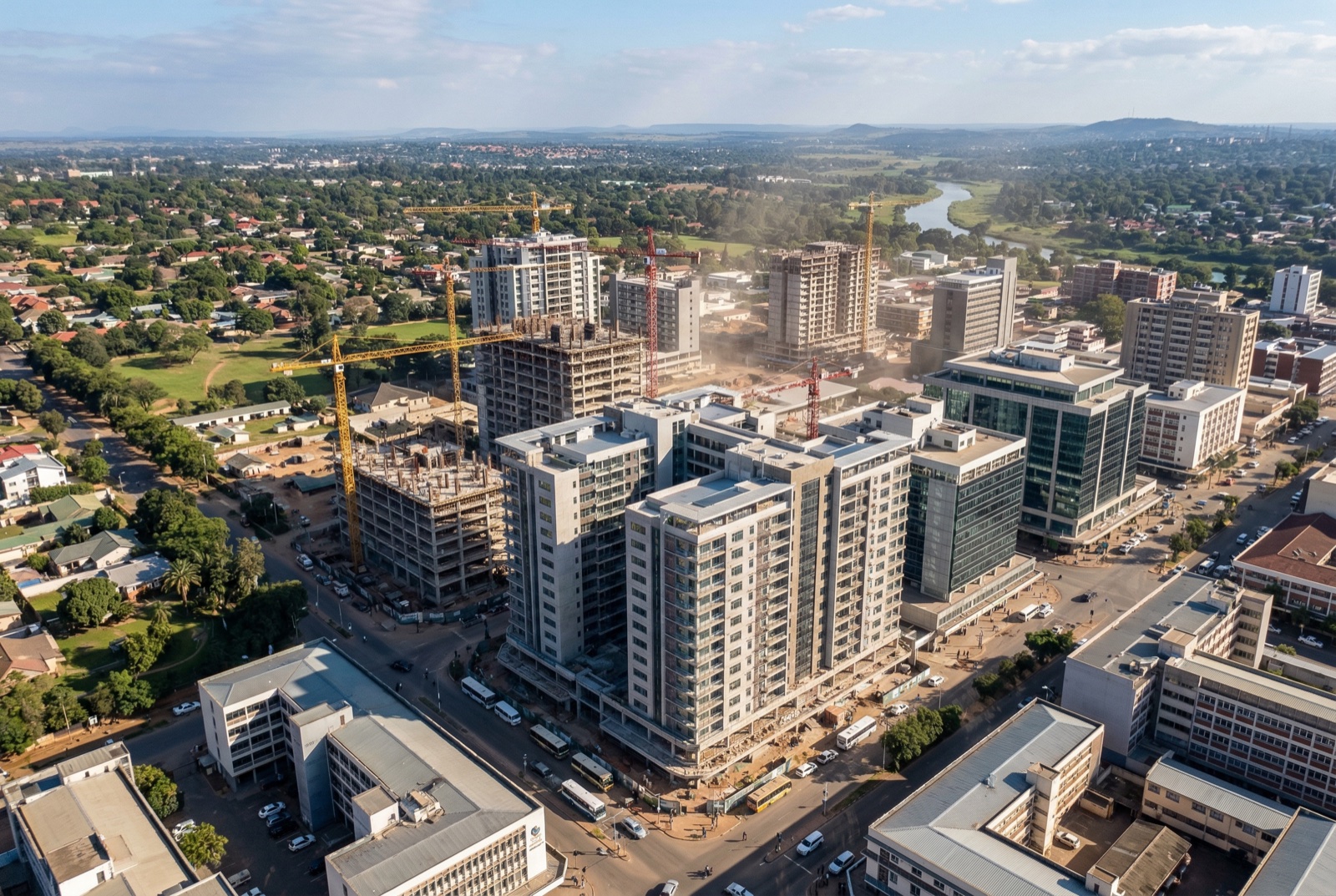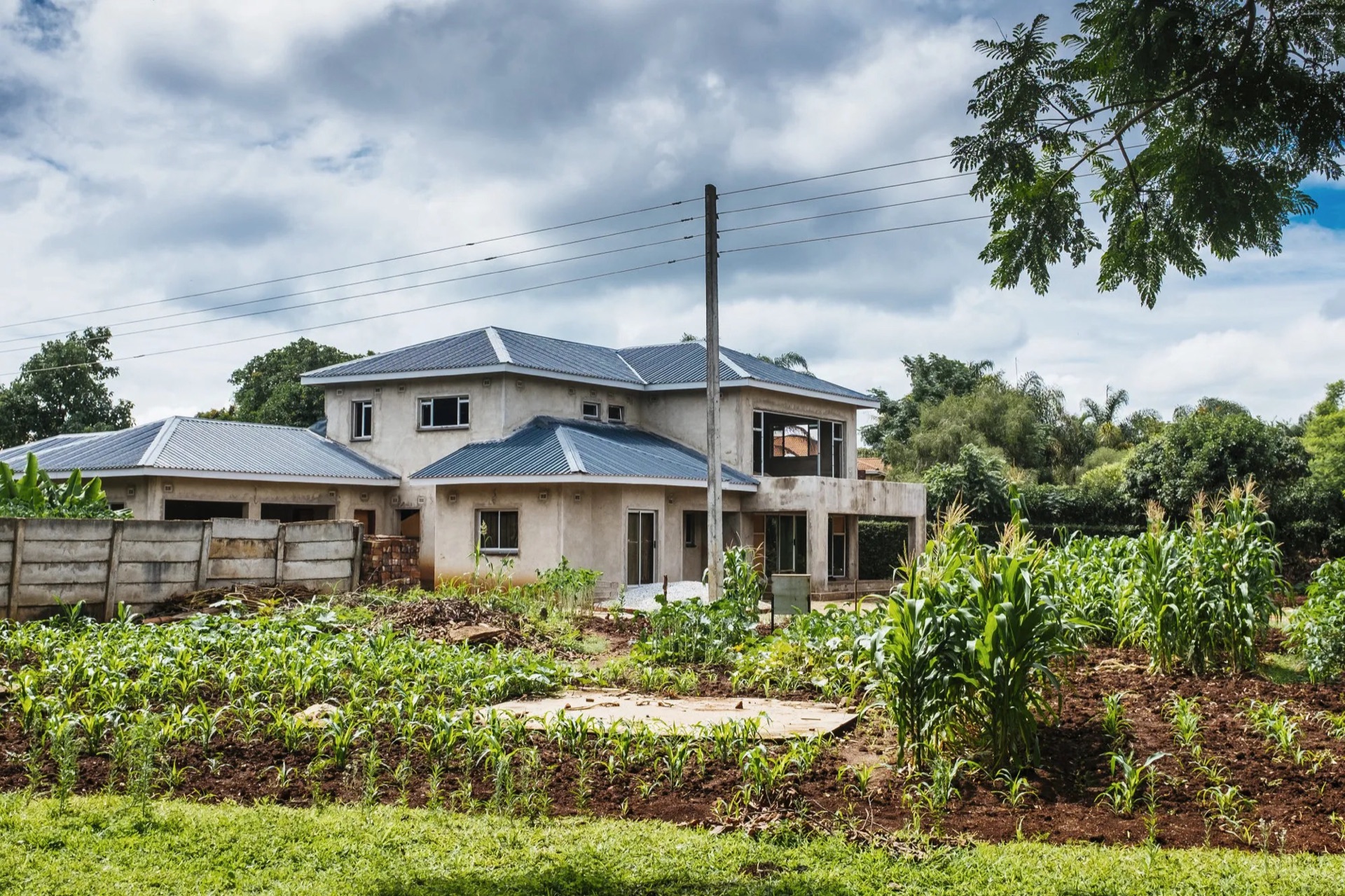
Zimbabwe's property market enters 2025 with more momentum than at any point since 2019 — and more complexity. The ZiG currency is stabilising (for now), Harare's northern suburbs just posted a 36.8% price surge, and the diaspora buyer cohort is larger than ever. But title deed fraud is still endemic, the regulatory environment is evolving rapidly, and proptech is arriving faster than the market knows how to use it. Here is what to watch in 2025.
The ZiG Stabilisation Question
Zimbabwe's newest currency arrived in April 2024 with more credibility architecture than any of its predecessors. The Zimbabwe Gold — ZiG — was introduced on April 8 at 13.56 per US dollar, backed in theory by gold and foreign currency reserves held by the Reserve Bank of Zimbabwe. It was meant to signal a new monetary era.
The signal faded quickly. By September 27, 2024, the RBZ had devalued the ZiG by 42.55% in a single adjustment, resetting the official rate to 26.36 per USD. The move followed weeks of parallel market pressure, and it repeated the pattern Zimbabwean observers know by heart: a promising launch, a period of managed stability, then a correction that erases the confidence the currency was designed to build.
By the close of 2024, the ZiG had settled at roughly 24 per USD on official channels, with parallel market rates running somewhat higher. The picture entering 2025 is one of cautious watching rather than confident prediction. Most property professionals — agents, developers, conveyancers — continue to denominate everything of significance in US dollars. They have learned not to trust local currency stability at a multi-year planning horizon, and that discipline has served them.
What this means for property buyers: USD-denominated transactions remain the safest structure for high-value residential and commercial purchases. ZiG-earning buyers saving toward a USD deposit face the familiar arithmetic problem — a local currency that may lose purchasing power faster than their savings accumulate it. Expect continued concentration of active buyers among USD earners, diaspora remittance recipients, and those with access to USD-denominated borrowing.
Title Deed Validation: A July 2025 Deadline That Matters
The most consequential regulatory event on the 2025 property calendar is the title deed validation deadline. From July 18, 2025, all holders of paper title deeds in Zimbabwe have 24 months to validate their documentation through the Deeds Registry. The government has framed this as a fraud-prevention and registry modernisation measure — and it is both of those things.
The practical implications for buyers and sellers are significant. Any property purchased after the deadline window opens should have its title validation status confirmed as a standard part of due diligence. A seller who has not completed the validation process may have limited ability to transfer clean title, creating potential conveyancing complications. Buyers should add a specific question to their attorney's pre-purchase checklist: has the seller initiated or completed the July 2025 validation process?
For the market as a whole, the validation deadline has a potentially positive effect: it will flush dormant and fraudulent titles into the open, creating a cleaner registry over time. Title deed fraud has been one of the persistent structural risks in Zimbabwean property transactions, and any mechanism that reduces the universe of unvalidated paper is a long-term positive for buyer confidence. The short-term friction of the validation process is worth the downstream clarity.
Pomona City: Zimbabwe's Smart-City Ambition Takes Shape
Among the development projects on the 2025 radar, Pomona City stands out for its scale and ambition. Positioned north of Harare in the Pomona/Borrowdale corridor, the project represents one of the most comprehensive mixed-use development concepts in Zimbabwe's recent history — combining residential, commercial, retail, and institutional components on a single planned precinct.
As of early 2025, the project is in early phases. Infrastructure groundwork and master-planning are the current focus, with full residential sales not yet underway at scale. But the project already attracts significant attention from diaspora buyers looking for planned estate living with sustainability features, modern infrastructure, and a clear title structure — the combination that the diaspora buyer cohort has consistently signalled as their priority.
Watch this space: if Pomona City's early delivery meets its specifications, it could become a significant anchor for the northern corridor property market in the second half of the decade, and a benchmark for how Zimbabwean developers approach master-planned communities going forward.

ZimReal Expo 2025: Proptech Takes the Floor
Zimbabwe's annual property exhibition, ZimReal Expo, has historically been a showcase for developers and agents. The 2025 edition is shaping up to be the event at which proptech finally takes centre stage alongside the traditional exhibitors.
The platforms that have quietly built market presence over the last three years — ShonaHome, PropertyHandle, and Menzill among them — are expanding their feature sets and deepening agent adoption. Digital listing tools, virtual tour integration, and data-driven valuation tools have moved from novelty to expectation among the more professional end of the agent market. ZimReal 2025 is the event at which that shift is likely to be most visibly on display.
For buyers, the practical takeaway is that more listing data is available with less effort than at any point in Zimbabwe's property history. A diaspora buyer researching from London or Johannesburg can now access reasonably comprehensive listing coverage, floor plans, and photo tours without needing a local contact to print out agent brochures. That access is not yet complete — a meaningful share of listings remains off-portal, transacted through agent relationships — but the direction of travel is clear.
Blockchain Titles: From Theory to Pilot
The idea of blockchain-based land registration has circulated in Zimbabwean policy conversations for several years. In 2025, the conversation is moving — cautiously — from theoretical to pilot-stage. ZimSEC and a handful of proptech startups are exploring how distributed ledger technology could underpin a fraud-resistant, tamper-evident land registry that complements (rather than replaces) the existing Deeds Office structure.
The fraud prevention angle is the most compelling use case. Zimbabwe's title fraud problem is structural: it is enabled by paper documentation that can be forged, altered, or duplicated, and by a registry that is not easily queryable in real time by buyers, agents, or attorneys. An immutable digital record — even one that runs alongside the existing paper system — would substantially raise the cost of title fraud and make fraudulent titles easier to detect at the due diligence stage.
Realistic timeline expectations: widespread blockchain title implementation is 2–3 years away at minimum. Infrastructure, legislative, and capacity constraints mean that any pilot programme in 2025–2026 will cover a small subset of new registrations rather than the existing freehold stock. But the direction of policy intent is positive, and buyers in newly surveyed and newly registered properties may encounter blockchain-adjacent documentation sooner than those transacting in older established suburbs.
Diaspora Fintech: A Growing Ecosystem
The diaspora buyer — the Zimbabwean living in the UK, South Africa, Australia, or North America who wants to purchase property back home — has historically faced a set of practical obstacles that have nothing to do with affordability. Moving funds cross-border into Zimbabwe. Executing a power of attorney from overseas. Managing a purchase process across time zones with agents who may not be digitally fluent. Dealing with a conveyancing process that moves at a pace calibrated to physical document delivery.
A nascent but accelerating fintech ecosystem is attacking these obstacles. Escrow services designed for cross-border property transactions, digital power-of-attorney platforms, virtual tour tools integrated with agent platforms, and remittance services purpose-built for real estate deposits are all available in early-stage form as of 2025. None of these tools is yet the industry-standard default; all of them are being used by a small but growing share of diaspora transactions.
"The diaspora buyer cohort is structurally the most important source of demand in Zimbabwe's premium residential market — and the tools to serve that cohort are finally beginning to catch up."
The practical advice for diaspora buyers in 2025: ask your agent whether they have experience with digital POA processes and cross-border escrow. The answer will tell you quickly whether you are dealing with a firm that has adapted to the diaspora market or one that still expects you to fly home to sign documents.
Suburban Expansion: Beyond the Northern Corridor
Harare's property geography has historically been dominated by the northern and eastern suburbs — Borrowdale, Mt Pleasant, Highlands, Chisipite, Msasa — with the rest of the city occupying a distant second tier in terms of buyer and investor interest. That geography is beginning to shift, driven by infrastructure investment and the basic arithmetic of affordability.
Hatcliffe, Ruwa, and Epworth are emerging as mid-range corridors attracting both domestic and diaspora buyers who have been priced out of the established northern suburbs. The USD 80,000–150,000 price band — which accesses very little in Borrowdale but a meaningful selection of quality housing in these emerging corridors — is the most active segment of the 2025 market by transaction volume. Developers have taken note: several significant new residential projects in 2024–2025 are targeted specifically at this price band and these locations.
The caveat is infrastructure. Parts of Ruwa and Hatcliffe have intermittent water supply, road surface quality that varies significantly from estate to estate, and electricity supply that depends heavily on whether a development has invested in solar or backup generation. Buyers in emerging corridors should scrutinise infrastructure provision at the individual development level, not assume that proximity to Harare means Harare-level services.
The 2025 Investment Outlook
For USD buyers, Zimbabwe's residential property market continues to present a genuinely unusual combination: meaningful USD rental yields in a period when global yield compression has made real returns on residential property scarce in most developed markets. Rental yields of 6–12% in USD are achievable for quality properties in well-located suburbs, managed by professional agents in a market with structural undersupply of good-quality rental stock relative to the executive tenant cohort — companies, NGOs, diplomatic missions, and well-capitalised domestic renters.
The macro risk profile has not changed materially. Currency stability remains the headline risk: a further ZiG devaluation, if severe, could reduce the purchasing power of ZiG-earning tenants and create rental affordability pressure that pushes USD rents down in real terms. Political continuity underpins the 2030 USD commitment, and any change to that policy horizon — whether through legislative action or economic necessity — would reprice the market. Infrastructure constraints remain a drag on quality of life and, by extension, on the rental premium that the most desirable suburbs can command.
The buyer advice that applies to 2025, as to every year in Zimbabwe's property market: verify titles rigorously. Use EACZ-registered agents. Build a relationship with a local attorney who specialises in conveyancing — not just any solicitor, but someone who does property transactions daily. Understand the full transaction cost stack (legal fees, transfer taxes, agency commission) before committing. And treat any off-plan purchase as a higher-risk transaction than an established property, because developer execution risk in Zimbabwe is real and not fully captured in the pricing.
The opportunity is real. So is the complexity. 2025 rewards buyers who have done the work.