Section 3 of 7
Week One -- The Critical Week
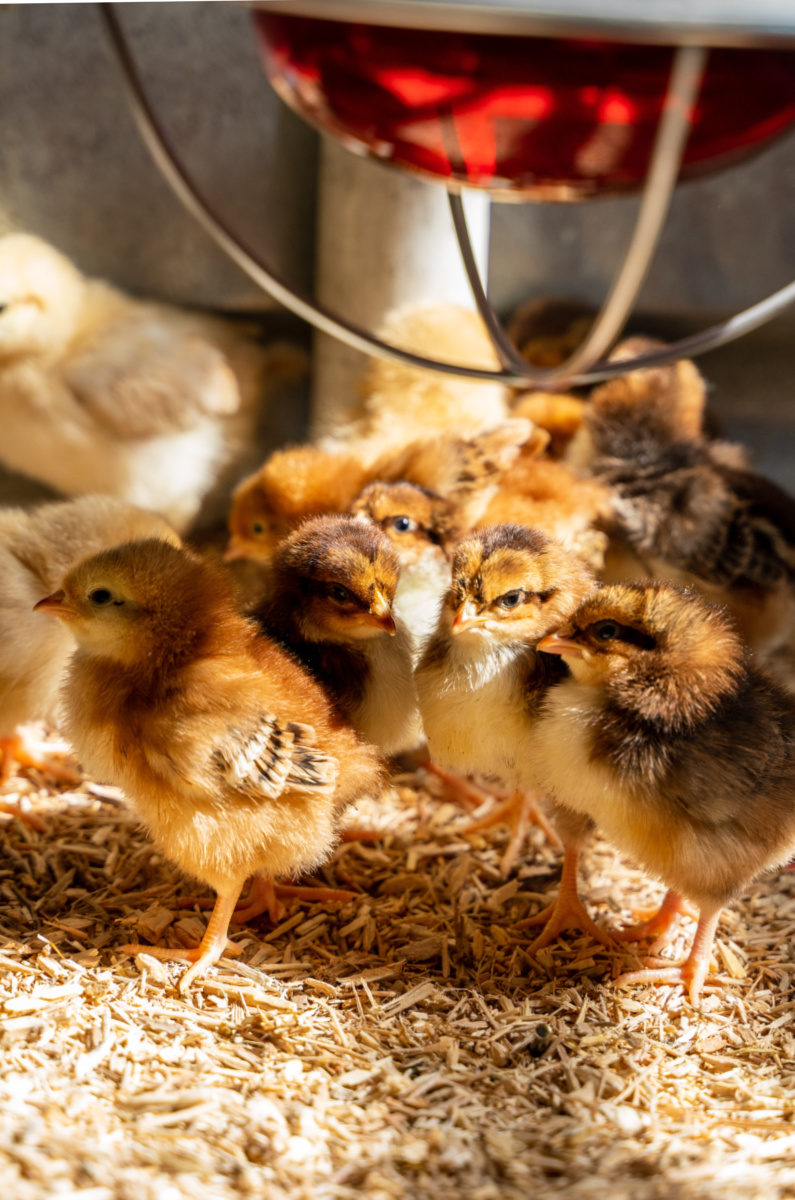
The first seven days carry the highest mortality risk of the entire growing cycle. Temperature management is the single most important factor -- get it wrong, and you can lose 10--20% of your flock before Week 2. Get it right, and your losses should be less than 1%.
Temperature Management
The brooder temperature must be maintained at 32--35 degrees C (90--95 degrees F) during Week 1. This is the single most important factor for first-week survival. Check the thermometer at least three times daily -- morning, midday, and evening.
Reading Chick Behaviour
You do not always need a thermometer to know if the temperature is wrong. Your chicks will tell you:
| Chick Behaviour | What It Means | Action |
|---|---|---|
| Huddled under heat source | Too cold | Increase heat / lower lamp |
| Spread evenly across brooder | Temperature is correct | No change needed |
| Panting, wings spread, avoiding heat | Too hot | Reduce heat / raise lamp |
| Clustered to one side | Draft present | Find and seal the gap |
Sources: Vencomatic Group; EntrepreneursHub
The Crop Fill Test
At 8--12 hours after placement, gently feel each chick's crop -- the bulge at the base of the neck. At least 95% of chicks should have full, soft crops by this point, indicating they have found feed and water. If crop fill is below 80%, check that drinkers and feeders are accessible and that the temperature is correct. Low crop fill at 24 hours is a strong predictor of first-week mortality.
How to check: Pick up a chick gently. Feel the area just below the neck and above the breast. A full crop feels like a small, soft, round pouch about the size of a marble. An empty crop feels flat.
Mortality Targets
Acceptable first-week mortality: less than 1% -- that means 0 or 1 bird lost out of 100. If you are on track after seven days, your management is working. (source)
Normal total-cycle mortality is 3--5% for a well-managed small flock. For 100 birds, expect to sell 95--97 at market.
5 Common Week 1 Mistakes
Feed During Week 1
Continue with NovaFeed Broiler Starter Crumble (protein content typically 21--23%). Estimated consumption for 100 chicks in Week 1 is approximately 15--20 grams per bird per day, totalling roughly 10--14 kg for the week. (source)
Lighting: Maintain 24 hours of light for the full first week to maximise feed intake and early growth.
Check Your Understanding
For each statement, decide if it is True or False.
1. If chicks are huddled under the heat source, the temperature is too high.
2. At least 95% of chicks should have full crops within 8--12 hours of placement.
3. Losing 5 birds in the first week out of 100 is normal and acceptable.