Section 2 of 7
Day One -- Chick Arrival
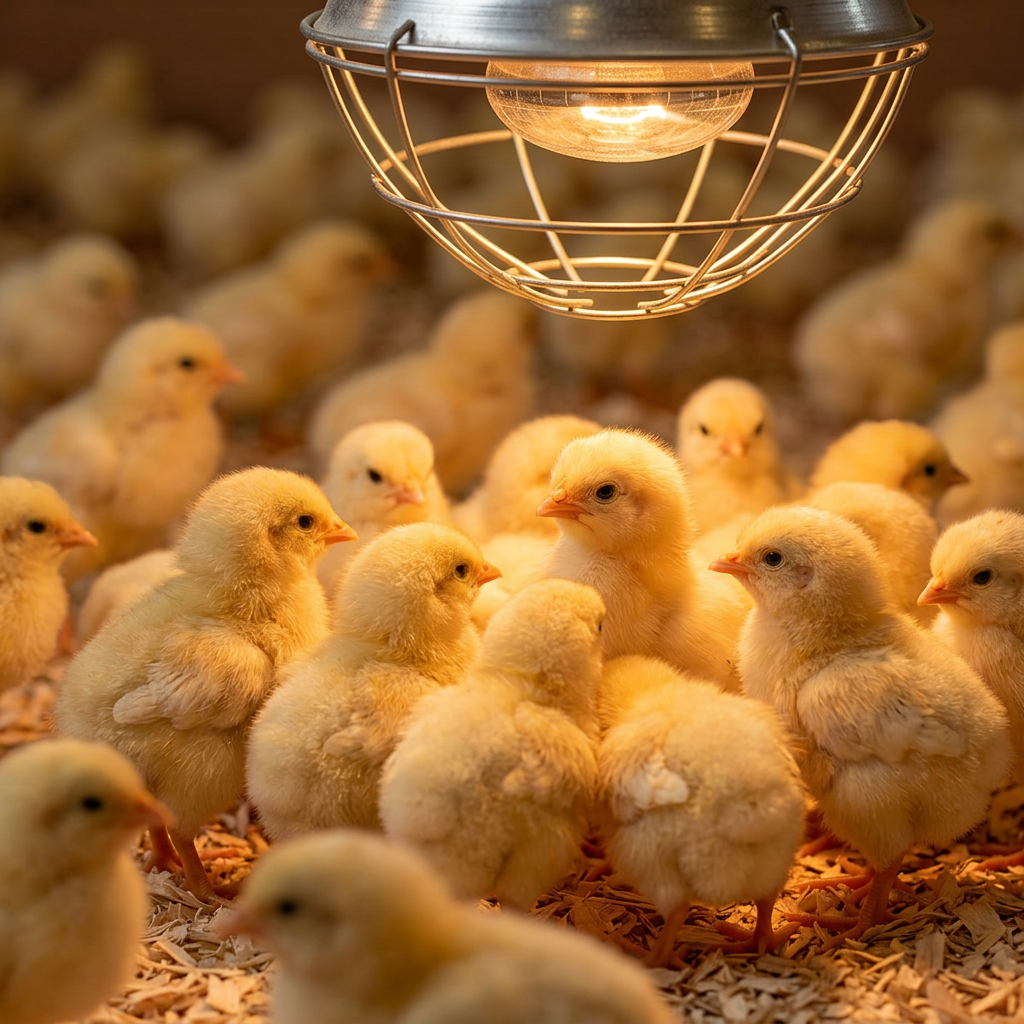
This is the most important day of your entire broiler project. How you handle the first 24 hours has a direct impact on first-week survival. Every action you take today -- from inspection to hydration to temperature -- sets the trajectory for the next six weeks.
Inspecting Chicks on Arrival
Chicks should come from a reputable hatchery. When the box arrives, check every chick for:
- Alertness and activity -- Healthy day-old chicks are active, bright-eyed, and vocal. Lethargic or silent chicks may be stressed or chilled.
- Dry, fluffy down -- Chicks should be fully dried. Damp or pasted chicks may have been in transit too long or stored incorrectly.
- Uniform size -- Day-old broiler chicks typically weigh 38--45 grams. Significant size variation suggests mixed-age batches.
- Vaccination marks -- Chicks should arrive vaccinated for Infectious Bronchitis and Newcastle Disease. Look for blue or green dye marks, or request the vaccination certificate from the hatchery.
Placement in the Brooder
Place chicks gently into the pre-heated brooder (32--35 degrees C). The brooder area should be ring-fenced with a cardboard or hardboard surround to prevent chicks from straying into cold corners during the first 5--7 days. (source)
First Water -- Before Feed
Water comes first. Add a stress pack or electrolyte supplement to the first water. This rehydrates chicks after transport and reduces arrival stress. Do not offer feed until chicks have had access to water for 1--2 hours.
Beak dipping technique: Gently dip the beaks of the first 20--30 chicks into the drinker so they learn where water is. The rest of the flock will follow their lead. (source)
Clean, room-temperature water must be available at all times. Broilers drink approximately 2--3 litres of water for every 1 kg of feed consumed.
First Feed
After chicks have had water access for 1--2 hours, introduce NovaFeed Broiler Starter Crumble. Scatter a small amount on clean paper or egg flats placed directly in front of the chicks -- this encourages immediate feeding. Do not use deep feeders for Day 1; chicks cannot reach into them.
Tip: Use clean white paper, not newspaper. Newspaper ink can be toxic, and the slippery surface causes splayed legs in young chicks.
Lighting
Provide 24 hours of light during the first 24--48 hours to encourage chicks to find feed and water. A dark brooder on Day 1 means hungry, dehydrated chicks by morning. (source)
Brooder Ring Setup
The cardboard ring serves three purposes: it keeps chicks near the heat source, prevents pile-ups in corners (a major cause of Day 1 deaths), and creates a controlled zone where feed and water are always within reach. Remove the ring after 5--7 days when chicks are strong enough to navigate the full house.
Think About It
Your box of 100 chicks has arrived. Three chicks look wet and lethargic. What do you do?
First, separate the weak chicks and place them closest to the heat source where the temperature is highest. Dip their beaks into the electrolyte water individually to ensure they drink. Monitor them closely for the first 6 hours. If they perk up and become active, they can rejoin the flock. If not, they may have been chilled during transport -- unfortunately, severely chilled chicks rarely recover. Do not delay placing the healthy chicks while you attend to the weak ones.
Check Your Understanding
For each statement, decide if it is True or False.
1. Chicks should receive feed before water on arrival day.
2. Dipping the beaks of the first 20 chicks into the drinker helps the entire flock find water.
3. The brooder should be pre-heated to 32--35 degrees Celsius before chicks arrive.