UK Law
The UK's AML Legal Framework
- Some of the toughest AML laws in the world
- Understanding them is not optional — it is a legal obligation
POCA
The Proceeds of Crime Act 2002
- The foundation of UK money laundering law
- Creates the criminal offences that make laundering prosecutable
POCA
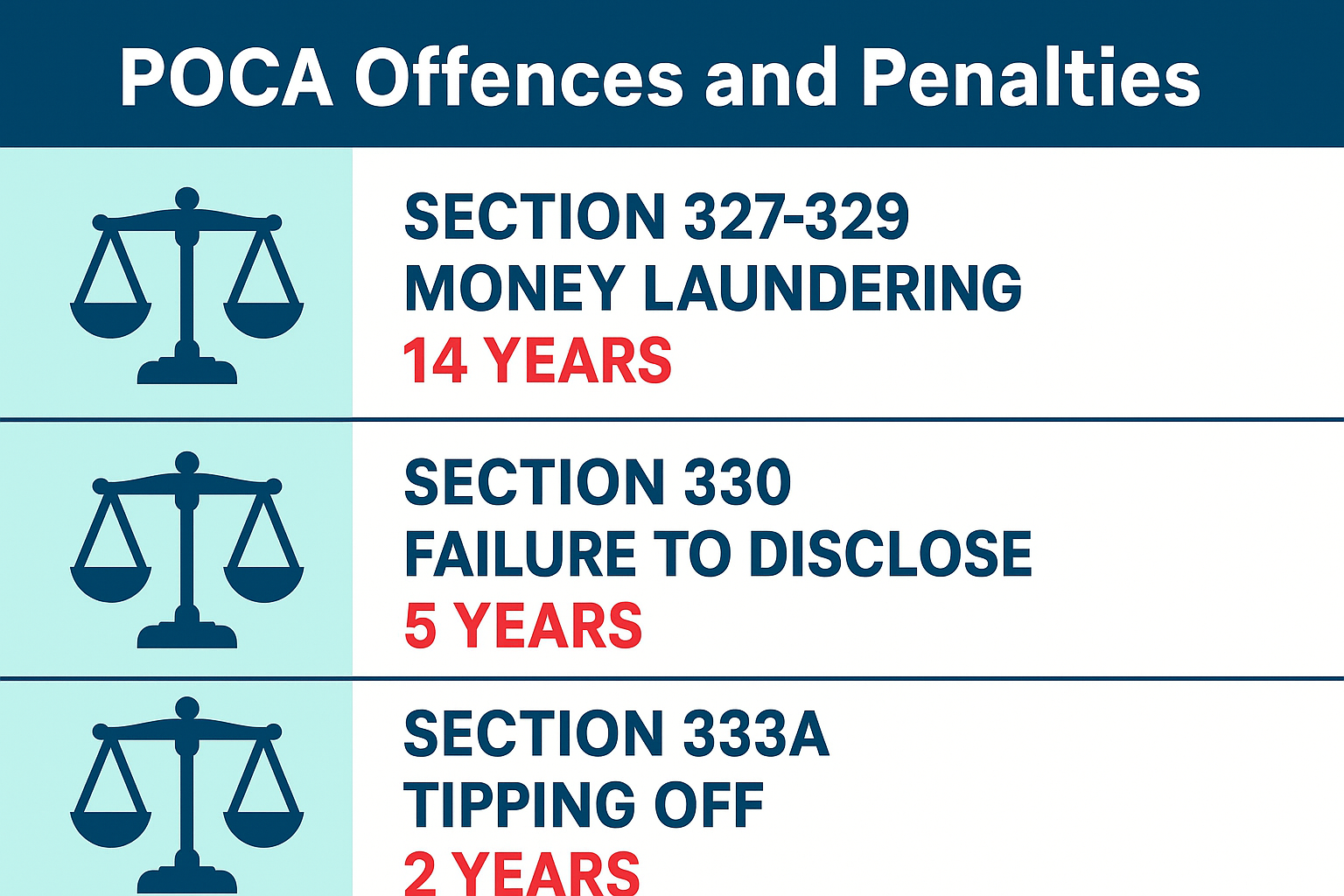
Principal Offences: Sections 327–329
- Concealing criminal property
- Arranging to handle criminal property
- Possessing criminal property
POCA
Failure to Disclose: Section 330
- If you suspect laundering and say nothing, that is a criminal offence
- Applies to every person in the regulated sector
POCA
Tipping Off: Section 333A
- Telling someone a SAR has been filed about them
- A careless word to a client can be a criminal act
Regulations
Money Laundering Regulations 2017
- Risk assessments for every client relationship
- Customer due diligence at onboarding and beyond
- Ongoing monitoring of transactions
- Record keeping for at least five years
Regulations
2025 Amendments
- Enhanced due diligence narrowed to FATF Call for Action countries
- Crypto firms brought into closer regulatory alignment
- Changes take effect in 2026
FCA
The FCA's Supervisory Role
- Supervises 20,000 firms for AML compliance
- 2026 priority: AML deficiencies = governance failings
- Increased risk of personal liability for senior managers
International
The FATF Global Standard
- 40 recommendations across 190+ countries
- UK rated compliant on 24, largely compliant on 15
Barclays Framework
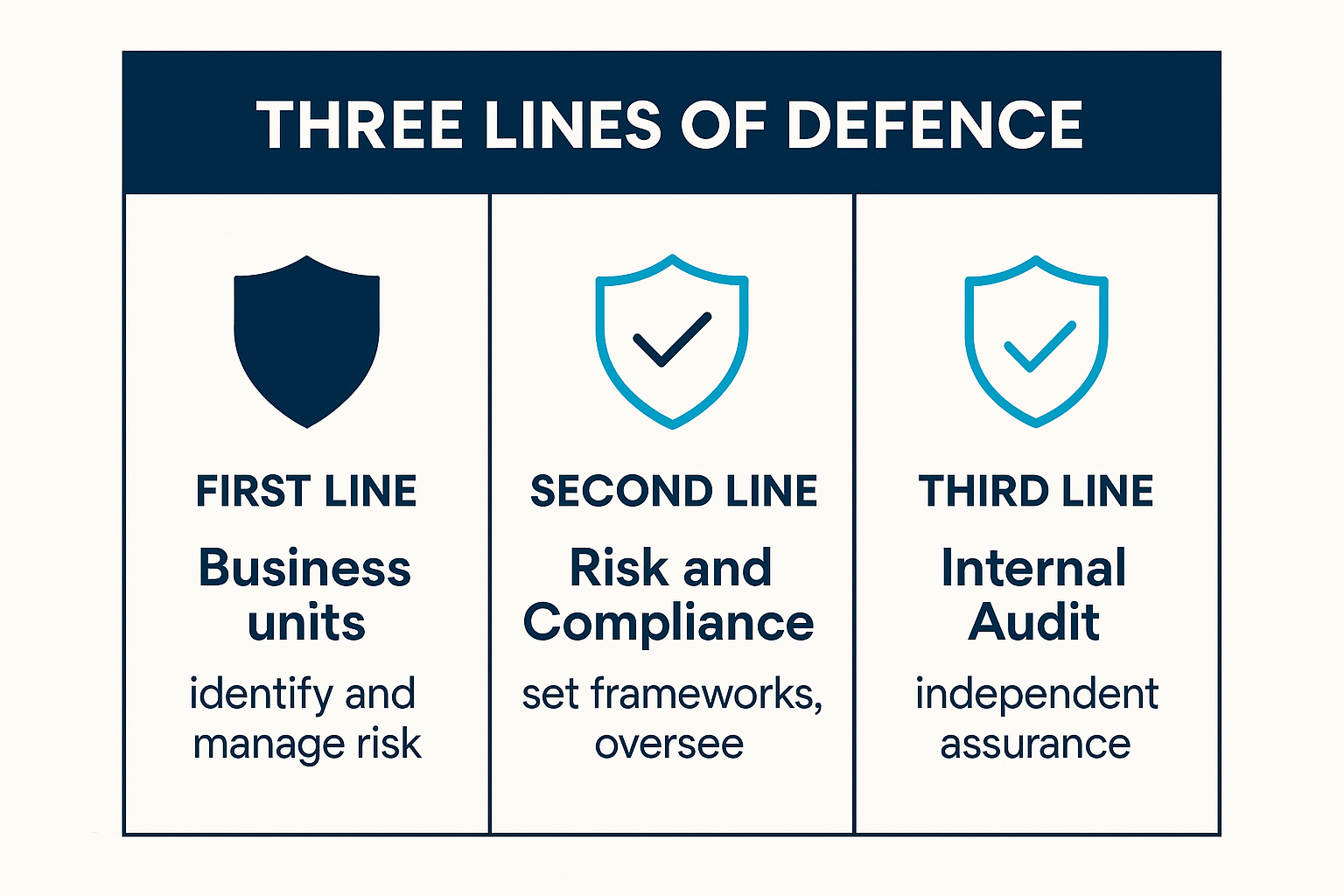
Three Lines of Defence
- 1st Line: The business — due diligence day to day
- 2nd Line: Risk & compliance — frameworks and oversight
- 3rd Line: Internal audit — testing whether controls work
Barclays Framework
The Financial Crime Policy
- Since January 2025: principal risk with Board-level oversight
Guidance
JMLSG Industry Guidance
- Approved by HM Treasury
- Following it offers a safe harbour
- Generally satisfies the regulator that obligations have been met
Your Obligation
Section 330 Applies to You
- Know the law
- Follow the framework
- Report your concerns